


It’s a bright afternoon here in Houston.
We look forward to a wide range of programs in this dynamic and energetic city today and tomorrow. pic.twitter.com/JxzWtuaK5x
Narendra Modi (@narendramodi) September 21, 2019
The event undoubtedly provided a platform to showcase the growing influence and contributions of the Indian-American community in the US. With a significant participation, “Howdy Modi” demonstrated the political and economic weight of the Indian diaspora.
The courting of the Indian-American community by both Republicans and Democrats has become more pronounced in recent times. Numbering just 45 lakh, Indian immigrants make up a scant one percent of the US population, but pay six percent of the country’s total income tax. It is the second largest immigrant community in the United States. More than 40 American Indians have been elected to various positions in the US. There are four representatives in the House: Ami Bera, Ro Khanna, Raja Krishnamoorthi and Pramila Jayapal. There are a few mayors to boot. According to a report, there are 35 judges of Indian origin in the United States, a record number for the community in judicial appointments.
The rise of Indian-American politicians in recent years is a testament to the growing impact of the community. Notable figures like Kamala Harris, who became the first Indian-American and woman of color to hold the position of vice president, have broken barriers. As the second generation of the Indian-American community came of age, they became more involved in political activism and advocacy. Recognizing the importance of representation, they sought to influence policy and shape political discourse at the local, state, and national levels.
People of Indian origin also have a dominant place in the business world. It is a source of pride for all Indians that Indian-Americans lead more than two dozen American companies, including Google chief Sundar Pichai and Microsoft’s Satya Nadella. And finally, the growing influence of the community can be measured by the fact that the Biden administration has appointed 130 American Indians in many key positions — more than the administrations of both Trump and President Barack Obama.
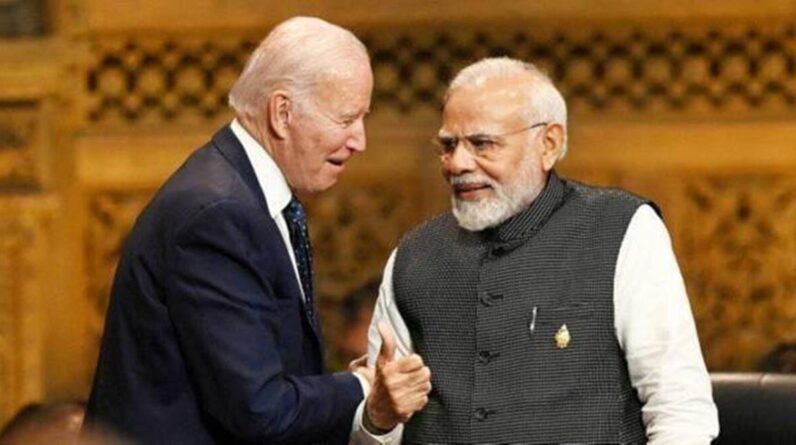
Visiting Indian Prime Ministers have often interacted with the Indian-American community. They have also done it in other countries. But it was Modi who recognized their growing influence and reached out to them in a big way soon after coming to power. Wherever he went, he sought out the Indian diaspora and made them connect with India. He has introduced them as ambassadors of India, playing a crucial role in promoting the country’s image, fostering economic ties and building political relations.
One of the main reasons for Modi’s strong connection with the Indian diaspora in various countries is his charismatic leadership style. His famous oratory skills, combined with his ability to connect with people on an emotional level, have helped him forge a personal bond with the diaspora. PM Modi also knows that the diaspora is diverse, mirroring Indian society at home. It’s looking for everyone, regardless of their political allegiance.
But in the United States, he seems to have developed a special bond with the vibrant Indian-American community. In fact, he is aware that America is the only world superpower. Washington DC is a busy capital with visiting dignitaries and an ever-increasing number of lobbyists and power brokers. Governments around the world want access to the Oval Office and compete for the president’s attention. It helps, in many ways, if you have people of Indian origin in the administration.
American society generally believes in quid pro quo. Modi understands this and in return is offering Indian-Americans and other investors great opportunities at home. It was not surprising to note the presence of a large number of key business leaders from both countries at the “Howdy Modi” event. It served as a promotional opportunity bilateral trade and investment between the US and India. In addition, Prime Minister Modi’s government has strengthened ties with the Indian-American community through initiatives such as the Pravasi Bharatiya Divas (Non-Resident Indian Day) and the Overseas Citizen of India (OCI) Programme.which grants certain benefits and privileges to overseas Indians.
India’s growth story has been impressive in the last nine years. But there are big challenges ahead. The Indian diaspora, especially in the US, can play a prominent role in overcoming these challenges and moving India’s growth story forward smoothly.
The writer is National Spokesperson, BJP, former Member of Parliament and former Managing Director of Deutsche Bank, India.
[ad_2]
Source link